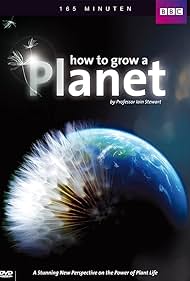
How to Grow a Planet
Geologist Ian Stewart explain in three stages of natural history the crucial interaction of our very planet's physiology and its unique wildlife. Biological evolution is largely driven bu adaptation to conditions such as climate, soil and irrigation, but biotopes were also shaped by wildlife changing earth's surface and climate significantly, even disregarding human a... Read all
Genre: Documentary
Cast:Iain Stewart , Klaus Schmidt , Jill Pruetz , Daniel Martin , Jim Spickler , Katrina Hope , Chris Austin , Norberto Asensio
S1.E1 ∙ Life from Light
In this first episode Professor Iain Stewart shows how plants first harnessed the life giving power of the sun, and created our atmosphere. He uncovers the epic battle between the dinosaurs and the tallest trees on the planet. He shows plants breathing - and for the first time talking to each other.
S1.E2 ∙ The Power of Flowers
In the Dino age, the earth was covered with pre-flowering plants, notably ferns and conifers. Their primitive methods of pollination were outclassed by a novelty, flowers, designed to attract animals, mainly insects, who soon started specializing in collecting pollen and/or nectar. Together they cerated giant tropical forests on over half of the land. Most species were extinguished by the mega-asteroid which wiped out the Dinos, but enough survived as seeds. Mammals and birds became major seed eaters and propagators. The interaction between flowering plants and animals, specific to all kinds of environments, became the main motor of unprecedented fast evolution and changed most of earth's surface spectacularly.
S1.E3 ∙ The Challenger
The meteor which wiped out the dinosaurs also made room for small plants, especially the grasses, which are better at harvesting CO2. There, nutritious, easily grazed seed and regenerating stems become favorite food of many animals, transforming large tracts of former forest, part of an intricate global food cycle. They also have armies of pollinators and a remarkable relationship with fires, required for prairie rejuvenation. A fluke of nature, easily harvested grains, made cereals ideal for human cultivation, the start of sedentary civilization, which again transformed the globe.
